
Commercial Property Leasehold Vs Freehold: Choosing For The Future?
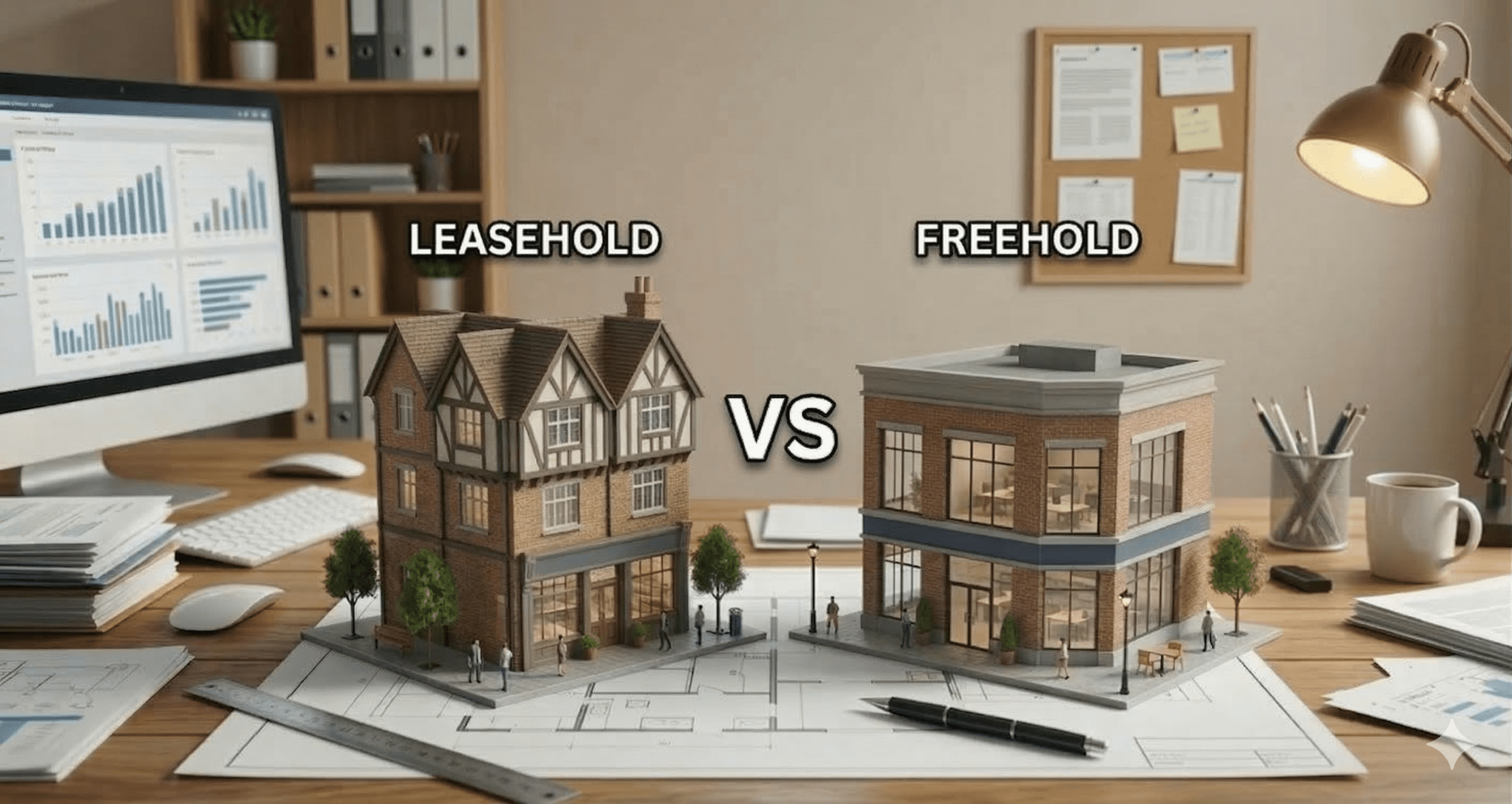
In the management of a commercial portfolio, the method of ownership is just as significant as the physical asset itself. For established property companies and portfolio landlords, the debate regarding commercial property leasehold vs freehold is not merely a legal distinction; it is a strategic decision that affects long-term liquidity and control. While one offers absolute autonomy, the other provides a different entry point into high-value locations with a separate set of obligations.
Choosing the right structure requires a transition from looking at current yields to considering future asset performance. Understanding how each ownership type interacts with market fluctuations and legislative changes is essential for protecting the capital value of your investment property.
Understanding Commercial Property Types
The UK commercial market is diverse, and the tenure of an asset often dictates how it is managed. Most professional landlords will encounter a mix of both types within a diverse portfolio. A commercial property freehold means you own both the building and the land it sits on indefinitely. This provides the highest level of security and the freedom to refurbish or repurpose the space without seeking a superior landlord’s consent.
Leasehold, conversely, is a right to occupy and use a property for a fixed period. In many prime London locations, leasehold is the standard, particularly for multi-unit offices or retail spaces within larger developments. While the leaseholder has less control over the exterior and common parts, the lower initial capital outlay can sometimes allow for the acquisition of assets in more prestigious, high-demand areas.
Key Features Of Leasehold Vs Freehold
The primary advantage of a commercial property freehold is control. There is no ground rent to pay, and you have the final say on maintenance, service providers and structural alterations. For a long-term investor, this eliminates the risk of a depreciating asset that occurs as a lease term shortens.
Leaseholds involve a more complex relationship. You are subject to the terms of the lease, which may include restrictive covenants or high service charges. However, for those focused on specific income-generating assets, a leasehold can be a more efficient use of capital. The critical factor is the length of the lease. As the remaining lease term shortens, the value of a leasehold interest can begin to decline and financing options may become more limited. When comparing commercial property leasehold vs freehold, one must weigh the benefit of absolute control against the potential for higher yields in managed leasehold environments.
How To Value A Freehold Commercial Property
Valuation is where professional judgement becomes indispensable. When considering how to value a freehold commercial property, one must look beyond the bricks and mortar. The value is a combination of the vacant possession value, the potential rental income and the redevelopment prospects.
Key factors include:
- The quality and covenant strength of current tenants.
- The remaining term of any existing leases.
- Market comparable evidence in the immediate vicinity.
- The condition of the building and future capital expenditure requirements.
Unlike leaseholds, freeholds do not suffer from marriage value or the costs of lease extensions, but they do carry the full weight of insurance and structural repairs. A precise valuation ensures that you are not over-leveraged and that your investment property remains a resilient part of your broader strategy.
How To Choose Your Commercial Property Ownership Type
The decision ultimately rests on your long-term goals. If your ambition is to hold assets for decades, passing them down or building a permanent foundation, a commercial property freehold is often the superior choice. It offers the stability required to survive market cycles without the pressure of a declining lease term.
However, if your strategy is more transactional or focused on high-density urban areas, leaseholds are a practical reality. In these cases, the focus shifts to active management, ensuring that leases are renewed early and service charges are kept in check. Knowing how to value a freehold commercial property versus a leasehold helps you identify where the true growth potential lies within your portfolio.
For the professional landlord, the goal is always to reduce wasted time and unnecessary risk. By aligning your ownership type with your operational capacity, you ensure that every decision supports the long-term health of your property company.
Make Commercially Sound Decisions With Claridges
Navigating the complexities of freehold and leasehold acquisitions requires more than just data; it requires experience. At Claridges, our experienced commercial property advisors can help provide the necessary advice needed to help you choose the right path for your portfolio. We help you move away from high-volume, low-quality enquiries and toward execution-led outcomes.
Please get in touch to talk through your current assets and your future goals. Whether you are looking to acquire a new investment property or require a valuation for a disposal, we provide the credible, dependable advice you need to move forward with confidence.
